
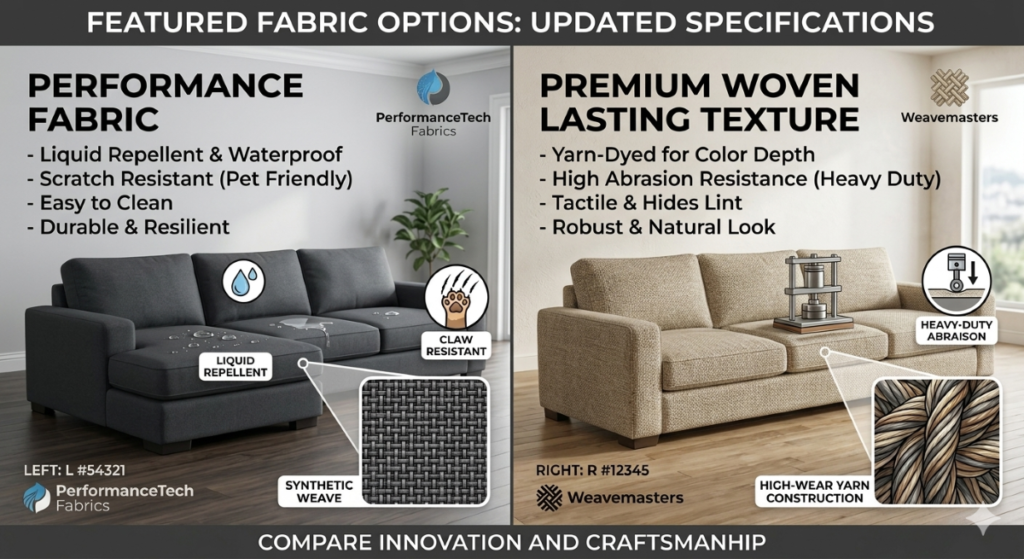
The best sofa fabric for most homes is a performance fabric (Crypton, Sunbrella, Revolution, or Inside Out) with a double-rub count of 50,000 or higher. For households without kids or pets, natural fibers like wool, cotton blends, and tightly woven linens hold up well and feel beautiful. Velvet, leather, and boucle each have a place, but each carries trade-offs worth knowing before you commit.
When clients walk into our showroom looking for custom furniture in Raleigh, NC, fabric is the decision that creates the most second-guessing. The frame is the frame. The dimensions are the dimensions. But fabric is where personality, practicality, and longevity all meet, and the wrong choice shows up in your daily life within weeks. This guide walks through the categories, the durability vocabulary, and how to pick a fabric that fits your actual life.
Before you fall for a swatch, two numbers tell you most of what you need to know.
Double rub count. This measures how many times a machine can rub the fabric before fibers begin to break down. A residential rating starts around 15,000 double rubs. For a sofa that gets daily use in a home with kids, pets, or frequent guests, most designers suggest 50,000 or higher. Anything above 100,000 is built for institutional or hospitality use and is overkill for a home, but won’t hurt.
Cleaning code. Look for a “W” (water-based cleaners), “S” (solvent-based), “WS” (either), or “X” (vacuum only). A “W” or “WS” code means real life messes can usually be addressed without professional help.
If a fabric doesn’t list these specs, it’s a sign the fabric is meant for decorative use, not heavy-traffic upholstery. Pillows and accent chairs can take fragile fabrics. A sofa shouldn’t.
Performance fabric is the catch-all term for upholstery engineered to resist stains, repel liquids, and handle abrasion better than standard fibers. Five names dominate the category, and each has a slightly different strength.
For most Triangle homes (especially those with children, pets, or a lot of weekend gatherings) a performance fabric is the right starting point. The cost premium is real but modest, and the lifespan difference is significant.
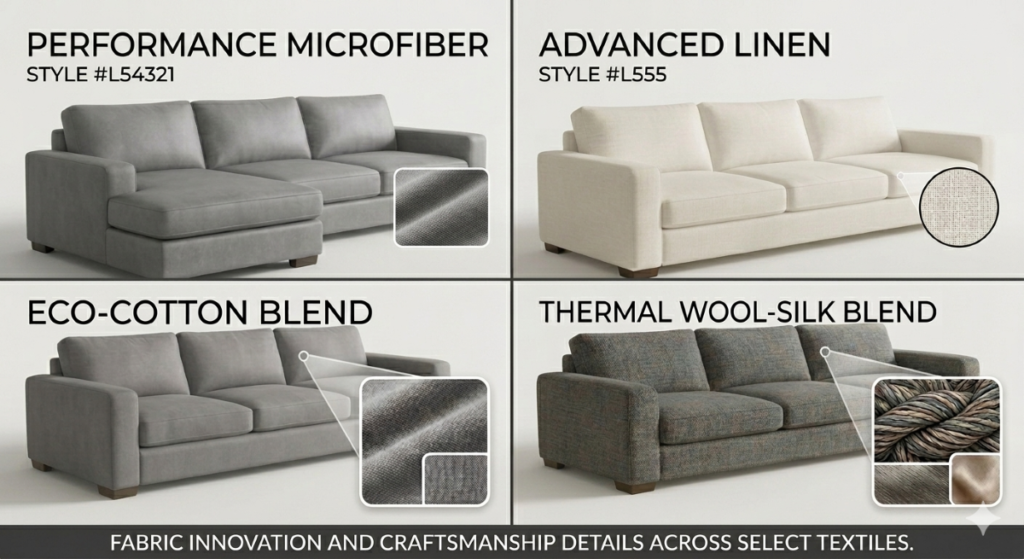
Natural fibers (cotton, linen, wool, silk, and their blends) feel different than synthetics. They breathe better, take dye in subtler ways, and develop a patina over time that performance fabrics don’t quite replicate.
The honest test: a living room used twice a year for guests can take a linen sofa. A family room where the kids do homework cannot.
Top-grain leather is durable, easy to clean, and develops character with age. It handles spills and pet hair beautifully because liquid wipes off and fur doesn’t grip. The trade-offs: leather can scratch from cat claws, can feel cold in winter, and needs periodic conditioning. Quality matters. Bonded leather and faux leather peel within a few years. If you’re going leather, go top-grain or full-grain. Leather works beautifully in libraries, dens, and Craftsman-leaning homes. It’s harder to integrate into airy, layered rooms with lots of color and pattern.
Beyond the fabric category, two practical factors shape how a sofa looks and lives over time.
The triangle design has shifted noticeably toward warmer earth tones in the last few years. Cool grays and ice blues, dominant from roughly 2015 to 2022, have given way to warm sands, dusty olives, mushroom, and increasingly actual brown. A custom sofa lets you pick a color that suits your home now and accessorize as your taste evolves.
Buying off-the-rack means picking from whatever fabric the retailer happened to put on the floor model. Custom flips that. You start with a frame you like and choose from a fabric library that often runs hundreds of options.
For Norwalk Furniture pieces (which we carry alongside other American makers), the fabric library includes nearly a thousand options across performance fabrics, traditional weaves, leathers, and patterns. We send swatches home with clients so they can see the fabric in their actual light, against their actual walls, before they commit. Doing this on a screen or under showroom lighting alone is one of the most common ways people end up disappointed with their pick.
The full custom process (frame, fabric, and the rest of the decisions) is covered in our custom sofa buyer’s guide. If you’re already focused on the deeper questions of construction quality and price, our piece on what custom upholstery actually involves breaks down what’s behind the price tag.
If you only remember one thing: pick fabric for the life you actually live, not the magazine version of it. Households with kids, pets, or frequent guests should start with performance fabric in a textured weave and warm mid-tone color. Quieter homes can play with linens, wools, and lighter colors. Sun-flooded rooms call for UV-resistant options. For chemical sensitivities, ask about Greenguard Gold certification and whether the fabric uses PFAS treatments.
We carry custom upholstery from American makers, and our designers help clients across Apex, Cary, Wake Forest, Chapel Hill, and Raleigh think through fabric choices that hold up to real life. Stop in when you’re ready to handle the swatches in person.